Protecting Customers, Powering the Future
Data Centers and Customer Rate Protection
Last updated: October 7, 2026
DTE Energy is deeply committed to supporting our customers and the communities we serve by delivering the safe, reliable energy you count on every day. As data center development grows across the country and here in Michigan, we remain focused on protecting our customers and keeping bills as low as possible. That is why we’re confident in saying that data center development will not increase customer rates.
In fact, DTE intends to pause future electric rate requests for at least two years as data centers come online.

It's the law
Michigan law — including recently passed data center legislation — ensures our customers will not subsidize data center rates.

We have your back
DTE is committed to including additional protections in the service agreements with new data center customers to ensure they will cover all new costs required to serve them — our customers will not pay.

Doubling down on reliability
DTE has enough energy capacity to reliably serve the demand of all customers. As an added safeguard, DTE is including special contracts for renewable energy, Demand Response programs and battery storage — paid for by the data centers.
Delivering Affordability Benefits and Protecting Customers
Michigan is uniquely positioned to lead the country in responsible data center development. We have strong regulatory oversight, clear laws and extra safeguards built in to our service contracts with data centers that protect our customers. In fact, DTE’s two data center contracts will contribute billions to improving DTE’s electric system through 2045, helping to reduce the total amount needed from other customers.
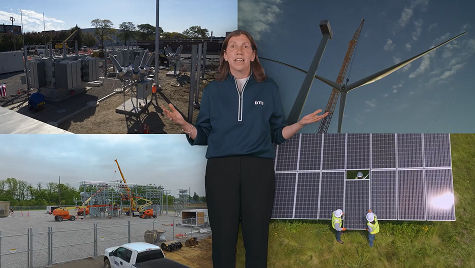

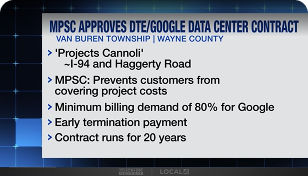
Affordability & Customer Protections Library
Accelerating Clean Energy Goals
Michigan law requires that DTE complies with the state’s nation-leading clean energy standard and renewable energy targets. Bringing data centers of this size onto DTE’s electric system means more renewables and more battery storage — paid for by the data centers. This will accelerate DTE’s development of clean, renewable energy and help DTE meet the state’s requirement of 50% renewable energy generation by 2030 and 60% by 2035.


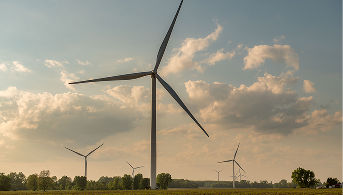
Accelerating Clean Energy Goals Library
Driving Economic Growth
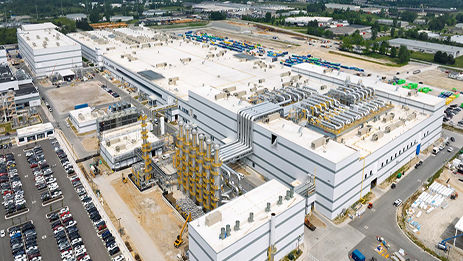
Responsible data center development brings economic benefits to the state, local communities and all Michiganders. These projects — and our work to support their energy needs — are leveraging Michigan-based businesses, increasing local tax revenue, creating jobs and supporting hometown communities.



Driving Economic Growth Library
What People Across Michigan Are Saying

"We are incredibly encouraged by the interest Google is showing in Van Buren Township. A project of this magnitude represents far more than just a building. It’s a significant investment in our local economy and a vote of confidence in our community’s infrastructure. ..."
— Van Buren Township Supervisor Kevin McNamara
“The scale of investment represents both a major fiscal opportunity and an important step in ensuring our region keeps pace with modern infrastructure needs."
— Phil Santer, Senior Vice President & Chief of Staff, Ann Arbor SPARK

“It’s critical for sustaining it for the future, for our children, for our grandchildren. To have a revenue source that allows our community to grow and fund our local police and fire departments as well.”
— Saline Township resident of 20 years

“Commencement of this project will also create a boom of economic activity in southeast Michigan that will help bolster local small businesses. In addition to the 2,500 jobs involved in the construction of the facility itself, everyday operations of the facility promises to bring hundreds of high paying permanent jobs to the area, creating opportunities for further economic growth in the region.”
— Small Business Association of Michigan
“Michigan is open for business and on the move. Thanks to our historic investments in infrastructure, workforce, and education, more high-tech companies want to innovate, grow, and create jobs in Michigan communities. Construction jobs are at an all-time high and Michigan was named a top state for business two years in a row. ..."
— Governor Gretchen Whitmer
“This project represents not only construction work, but long-term operations, maintenance, and technical support opportunities — careers that sustain families and strengthen local communities.”
— Michigan Pipe Trades Association
- Van Buren
- Ann Arbor Spark
- Saline Resident
- Small Business Association
- Governor Whitmer
- Michigan Pipe Trades
“Data centers like this create hundreds of high-paying permanent jobs that will contribute to the state’s local economies for decades. These data centers also contribute a large amount of tax revenue to increase funding for government functions like police, fire, school districts, and other human services.” — State Rep. Tullio Liberati
“This project represents a significant opportunity for our state. The data center will bring substantial economic investment, create high-quality jobs, and reinforce Michigan’s position as a leader in innovation and technology infrastructure.” — State Rep. Joe Tate
“The Chamber is delighted to see that the contracts explicitly ensure the data center will absorb all new costs required to serve them, meaning this development will not increase rates for DTE's existing customers.” — Detroit Regional Chamber
“It will generate substantial economic and community benefits, including millions of dollars in new local tax revenue to support schools, first responders, and local governments... the construction phase alone is expected to create more than 2,500 union construction jobs, with hundreds of additional high-paying, long-term positions once the facility becomes operational.” — Michigan Building Trades Council
“It provides the township with financial resources and benefits to maintain our rural character and way of life for generations to come.” — Saline Township resident of 53 years
Frequently Asked Questions
No. Data centers built in DTE’s electric service territory will not increase customers’ rates. Recent legislation passed by the Michigan legislature ensures DTE customers will not subsidize data center rates.
Furthermore, DTE is ensuring the data centers will cover all new costs required to serve them through special contracts. By building renewable energy and battery storage, which the data centers are paying for, DTE is investing in its system in a way that protects and promotes continued reliable service for all customers.
As a regulated utility, DTE has a duty to serve all customers within our service territory. Our role is to provide power to these data center customers just as we would any other business customer. As data center investment increases across our region, we remain focused on reliability, keeping bills as low as possible and protecting all our customers. Unlike other states, Michigan law prohibits utility customers from subsidizing the costs of data centers. We are also committed to including additional customer protections in all data center contracts.
Unlike many other states, Michigan is uniquely positioned with recent legislation that incorporates rules that protect customer affordability, including that data centers cannot be served with a rate that would cause customers to pay for infrastructure and other costs required to serve the data center facility.
- With an additional eye on affordability for all its customers, DTE took extra steps in writing special contracts for these new data centers to ensure the data center customers are responsible for paying for the development of new energy resources like renewable energy and battery energy storage. These new energy sources will help serve the increased demand coming from data centers — especially during peak hours — and ensure continued reliable service for all customers.
- For the data center proposed in Saline Township, the new 1.4 gigawatts of electric load is expected to generate approximately $300 million of investment annually that will go directly into improving DTE’s electric grid, helping to reduce the total amount needed from other customers in future DTE rate requests.
- For the data center proposed in Van Buren Township, the new 1.0 gigawatt of electric load is expected to generate nearly $1.7 billion of positive affordability benefits over the life of the contract, helping to spread fixed grid costs across a broader customer base, which should reduce pressure on bills for existing customers.
Yes. DTE intends to pause future electric rate requests for at least two years as data centers come online. DTE’s two data center contracts – one approved and one currently with the MPSC for approval – will contribute billions to improving DTE’s electric system through 2045, helping to reduce the total amount needed from other customers.
First, Michigan law, including the recent sales and use tax exemption and cost of service rules, forbids DTE customers from subsidizing the costs of bringing a data center onto the system or subsidizing its rates.
Second, DTE’s current contracts with the data center customers require these data centers to pay all of the costs associated with the new generation resources necessary to serve them, including renewable energy and battery storage.
Finally, unlike other states and utilities, DTE owns and operates enough generation to serve its customers. This means that DTE does not rely heavily on the open market to secure energy to serve its customers, which protects our customers from unpredictable market price swings that other parts of the country experience.
DTE’s plan to address longer-term generation needs for current and future customers — including data centers — will be filed in the next integrated resource plan (IRP) with the Michigan Public Service Commission (MPSC) in 2026.
Data centers can help Michigan reach its clean energy goals. Michigan state law requires that any new generation needed to serve data centers must be procured through clean energy sources. This also helps accelerate DTE’s development of clean energy projects, enabling us to reach the state’s clean energy requirement of 50% renewable energy generation by 2030 and 60% by 2035. We are committed to serving our customers with the clean, reliable energy they deserve for generations to come.
As with any business or commercial operation, data centers contribute significant tax revenue to the communities in which they are located. Additionally, the investment in new power generation needed to serve them — which, again, the data centers pay for — will create additional jobs and tax revenue across the state.
Additional Resources
Project-Specific Information