Planning for the Grid of the Future
A Distribution System Plan (DSP) is a comprehensive five-year plan to modernize and strengthen the electric grid, which DTE submits to the Michigan Public Service Commission every three years. This distribution plan and our clean energy plan form the foundation for how we plan to meet customers’ electricity needs over the next 10 and 15 years — renewing our commitment to building a smarter, stronger grid that meets Michigan’s energy needs, while keeping your rates as low as possible.
We’re investing in the grid to give you more reliable power today — and to make sure it’s ready for the future.
Upgrades Keep You Connected and Ready for Tomorrow
Our plan outlines work for specific parts of the electric grid: the subtransmission and distribution systems. This is the network of utility poles, power lines, transformers, substations, circuits and other equipment that brings electricity to your home or business.

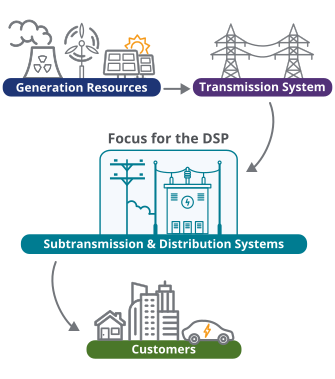
These upgrades also make it easier for your own energy solutions and future technologies to work seamlessly with the grid. Whether you have rooftop solar panels, battery storage, an electric vehicle, a geothermal system or another type of distributed energy resource (DER), our improvements help the grid handle the capacity and equipment you need it to — keeping everything connected and reliable.
Electric Grid Updates Focus on Four Areas
DTE is investing more than $10 billion from 2025 to 2029 to upgrade and enhance the electric grid to deliver on its commitment to reduce power outages by 30% and cut outage time in half by the end of 2029. This work is focused on four key areas:

Advanced technology

Upgrading existing infrastructure

Rebuilding portions of the grid

Trimming trees
Advanced technology
Upgrading existing infrastructure
Rebuilding portions of the grid
Trimming trees
- Reliability
- Affordability
- Safety
- Cleaner
Principles Guiding Our Planning Process
- Safe: Build, operate and maintain the electrical distribution system in a way that ensures the public and our employees are kept free from injury.
- Reliable and resilient: Ensure the system has minimal equipment outages and can quickly recover to prevent disruptions to you.
- Affordable: Provide cost-effective service to all customers, along with diverse and flexible generation resources that optimize our system to benefit you.
- Customer accessibility: Make flexible and accessible energy options available to all customers, and favor plans that support the diversity of Michigan communities.
- Clean: Operate in an environmentally sustainable manner to help achieve low-carbon aspirations and clean energy goals.

Distribution System Plan Resources
Session 2: October 20, 2025
Building a Smarter, Stronger Grid (recording)
Building a Smarter, Stronger Grid (presentation)
Session 1: October 1, 2025
Frequently Asked Questions
Creating a Distribution System Plan (DSP) provides a clear, forward-looking roadmap for grid investments and ensures that planning aligns with Michigan’s evolving energy needs while balancing affordability. This five-year plan outlines how DTE will enhance reliability, safety and resiliency through infrastructure upgrades and advanced technologies. The DSP also promotes transparency by allowing customers, regulatory stakeholders and the Michigan Public Service Commission to review and provide input on future priorities outside of the rate process.
The Distribution System Plan itself won’t change electric rates. It provides a roadmap for investments that may impact future rates. If rate changes become necessary, we must file a rate case with the Michigan Public Service Commission (MPSC). The MPSC carefully reviews and approves any proposed adjustments before they go into effect, ensuring transparency and fairness for all customers.
In July 2025, the Michigan Public Service Commission directed DTE to file a new Distribution System Plan (DSP) on or before June 30, 2026. We’re required to submit a DSP every three years.
Yes. The Michigan Public Service Commission first directed DTE to develop a five-year investment blueprint in 2016, resulting in Distribution Grid Plan submissions in 2018, 2021 and 2023. The plan we submit in 2026 will be the first plan featuring the new name.
The Michigan Public Service Commission requires utilities to provide a minimum five-year investment forecast and submit a new plan every three years, which allows DTE to update the forecast to reflect rate case outcomes, technological advancements, evolving customer needs and impacts from severe weather events. This cycle ensures the plan remains accurate, relevant and responsive to Michigan’s dynamic energy landscape.
Electric vehicles depend on a reliable and resilient power grid. The Distribution System Plan ensures the grid is prepared to support growing EV adoption by planning for increased electricity demand and integrating advanced technologies.
The Distribution System Plan (DSP) provides transparency into the process for safely and efficiently integrating distributed energy resources (DERs) — such as solar panels and battery storage — into our grid. By planning for these technologies, the DSP helps you connect seamlessly and ensures grid reliability as more DERs come online.

Our Distribution Planning in Action
Check out the Power Improvements Map to see our progress on the work featured in the distribution plan to improve power reliability in your area. You can also see our reliability work by county.
We Want to Hear From You
If you want to learn more about or get involved with our plans for the distribution system, email us at DTE.DSP@dteenergy.com.
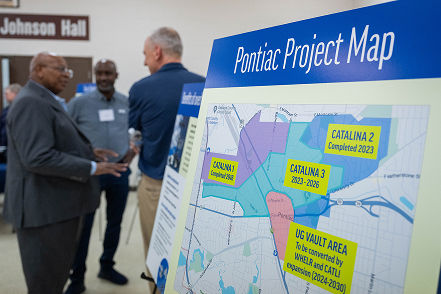
Image: Pontiac open house engaging the community on energy efficiency, tree trimming, underground services and customer concerns.