Joint Use: DTE Pole Attachments
Organizations can rent space on our distribution poles for connecting communications attachments. Our team will guide you through every step of the pole attachment process, from application to removal, to ensure installations are safe, compliant and reliable.
Need to Connect to DTE Poles?
What Can Be Attached to DTE Utility Poles
The following pole attachments are permitted for joint use, based on our team’s review of all attachment requests to ensure they meet safety and regulatory requirements.
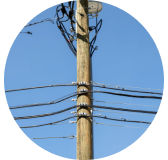
Telecommunications Equipment
Telecommunications providers, schools, municipalities and other entities can attach cables and other equipment for wired and wireless communications.
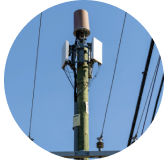
Antennas
Municipalities and telecommunications providers can attach antennas to our utility poles. Solar panels cannot be attached to power antennas.
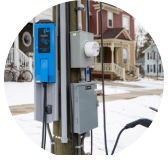
Pole-Mounted EV Chargers
EV chargers can be attached to our poles as long as they meet the size and electrical requirements.
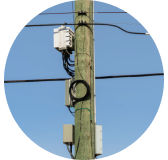
Other Pole Attachments
Power supplies, fiber cabinets, air quality sensors and mounting equipment can be attached to our poles.
What Cannot Be Attached to DTE Utility Poles
Some equipment cannot be installed on DTE distribution poles due to safety or regulatory requirements. See all attachments not permitted on our poles.
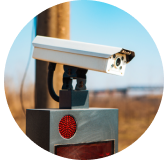
License plate readers
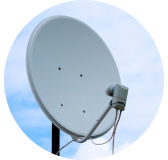
Satellite dishes
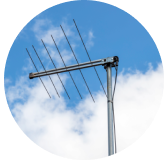
Home antennas

Flyers
Joint Use Application Process

Contact: Fill out this form if you have questions about joint use or are ready to start the process. Our team will reach out within two business days to learn more about your pole attachment needs.

Agreement: When you’re ready to move forward, you’ll sign a non-disclosure agreement and a DTE pole attachment agreement, which will include rental rates, before starting your application.

Application: You’ll fill out the required application forms detailing the attachment type, your contact and billing information and more. Depending on the attachment, you may need to work with us on a pole rendering or radio frequency study.

Inspect and design: We inspect the poles to make sure the proposed attachment follows regulations and then design any modifications needed to support the attachment.

Estimate and payment: We send you a quote outlining the cost of the modifications. You can accept, modify or decline the quote. If accepted, payment is required before we make the modifications.

Modifications and approval: We modify the poles so they are ready for your attachment, then review and approve your permit application.

Construction: After we send authorization to attach, you may begin construction.
Frequently Asked Questions
Joint use, also called pole attachment, allows telecommunications providers (cable, internet and TV) and other entities to place equipment on utility poles owned by electric companies. Entities that want to rent space on utility poles must get approval from the pole owner before equipment is installed.
At DTE, our team helps with the approval, engineering and design needed for safe, compliant installations. Because pole space is limited and may be shared by multiple attaching parties, this prevents DTE poles from becoming overcrowded, which ensures reliable service for customers and helps keep our communities safe.
Organizations that meet joint use regulations and safety standards for approved attachments may attach to our poles. The approval process can include requirements for the requester to provide franchises, consents, easements, permits and authorizations from government agencies and property owners.
We often work with telecommunications providers, municipalities, other government agencies, schools and businesses like transportation providers and commercial real estate companies. To follow federal and state laws, pole attachments from private organizations or individuals are not permitted.
If you're using your own pole to mount antennas or other equipment and need DTE to provide electricity, please contact the DTE Planning team.
If you need to connect to a pole that isn’t owned by DTE, please contact the pole owner to discuss joint use. You can find out who owns a pole from the metal identification tag attached to it.
If you don’t see the equipment you would like to attach listed, please contact us and we will let you know whether it can be attached to our distribution poles.
If you already have an attachment on a DTE pole and need help with something, please email us.
While many other states have elected for joint use to be regulated by the Federal Communications Commission (FCC), joint use in Michigan is regulated by the Michigan Public Service Commission (MPSC). This allows the MPSC to oversee the rates, terms and conditions of pole attachments. Wired pole attachments must also meet National Electrical Safety Code (NESC) and DTE safety standards.
Need to Connect to DTE Poles?









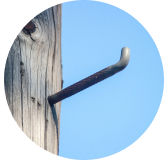
What Is Allowed on DTE Utility Poles
The following equipment can be attached to our poles, but our team reviews all joint use requests to ensure they meet safety standards and regulations.

Telecommunications Equipment
We support telecommunications providers with new attachment requests, as well as support for pole transfers and inspection violations/corrections.
Antennas
We support telecommunications providers with new attachment requests, as well as support for pole transfers and inspection violations/corrections.
Signs
We support telecommunications providers with new attachment requests, as well as support for pole transfers and inspection violations/corrections.
Other Attachments
We support telecommunications providers with new attachment requests, as well as support for pole transfers and inspection violations/corrections.